Tornalla

Edited by:
Samantha Blanchod
Introduction
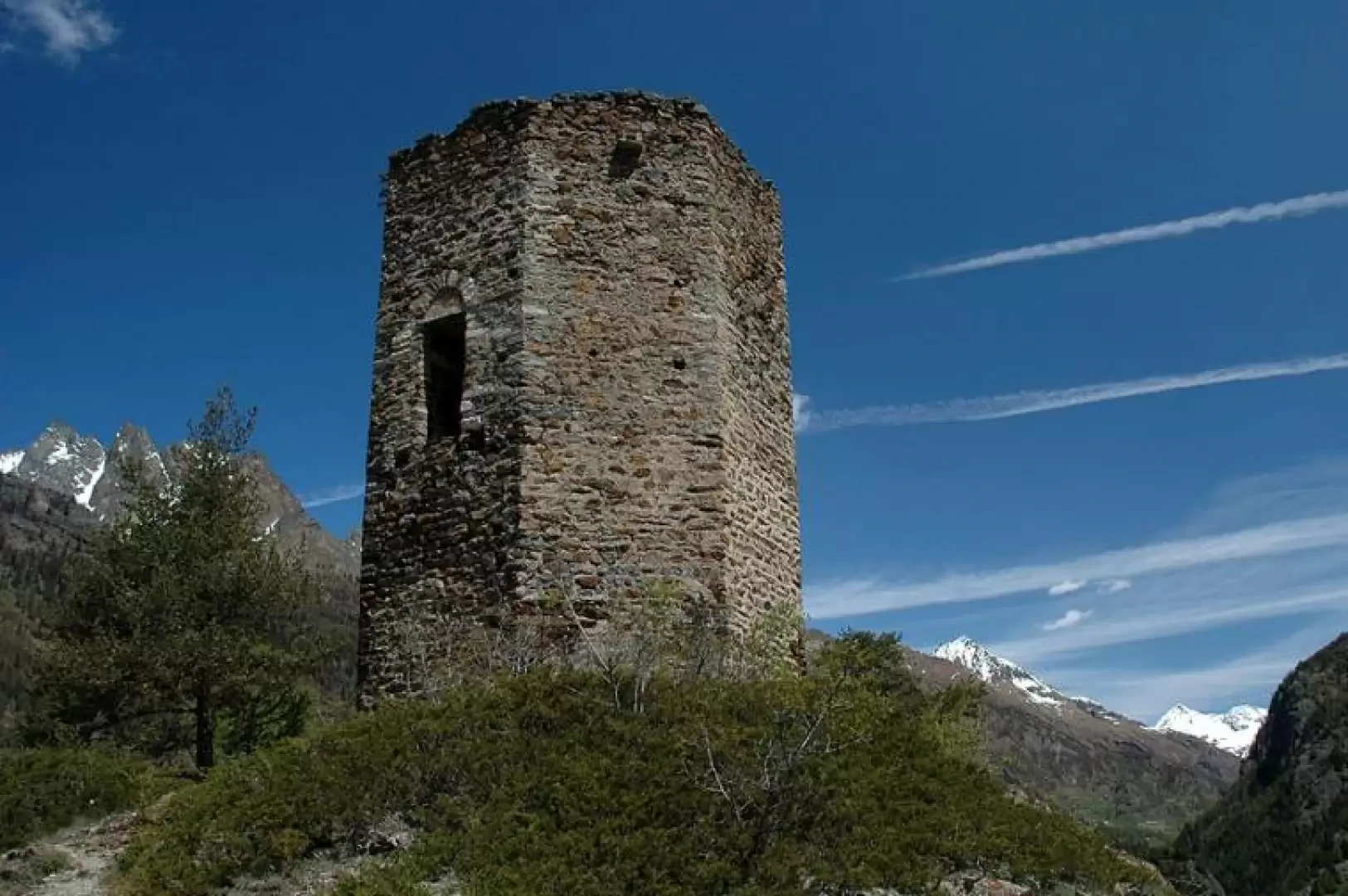
The Tornalla, built on the edge of a precipice 200 metres from the Buthier stream, dominates the entire valley from its position. Since it is not visually connected with other towers or castles and does not overlook any particular crossing points, it can be assumed that in the past it only served a control function over the surrounding area.
Description
Architectural description
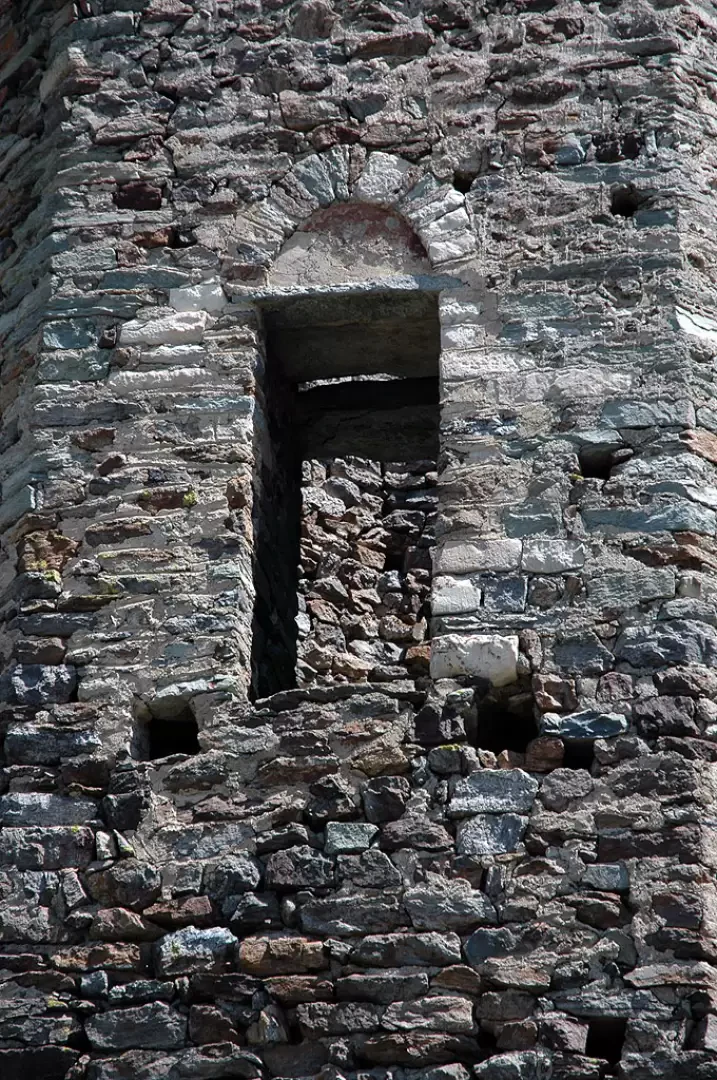
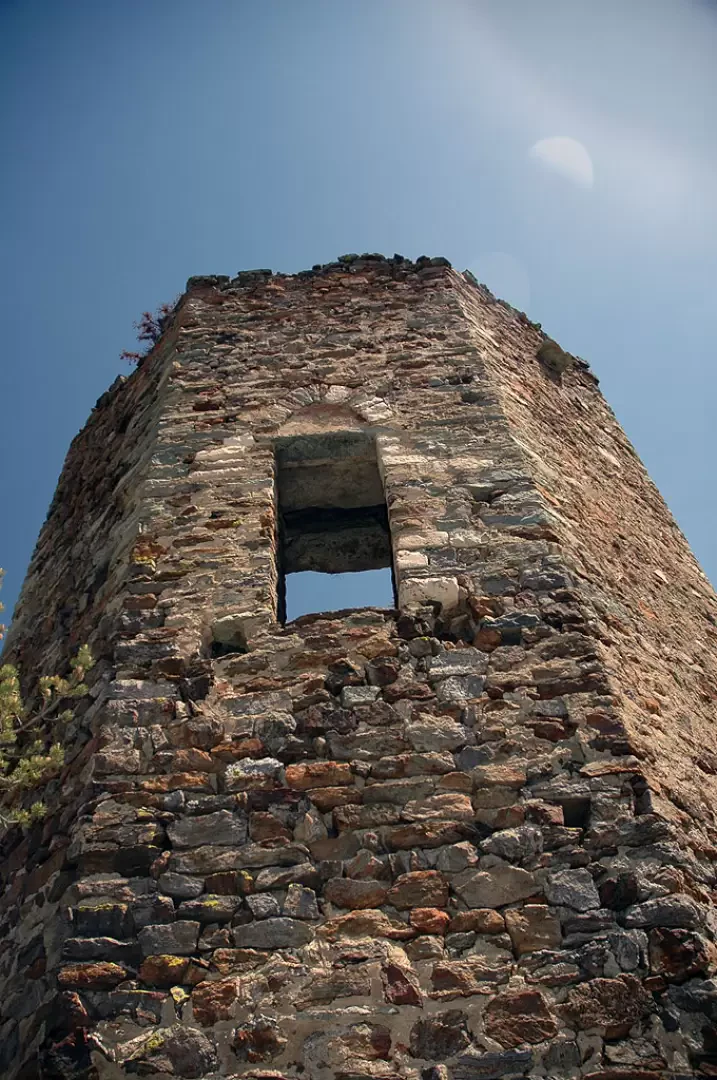
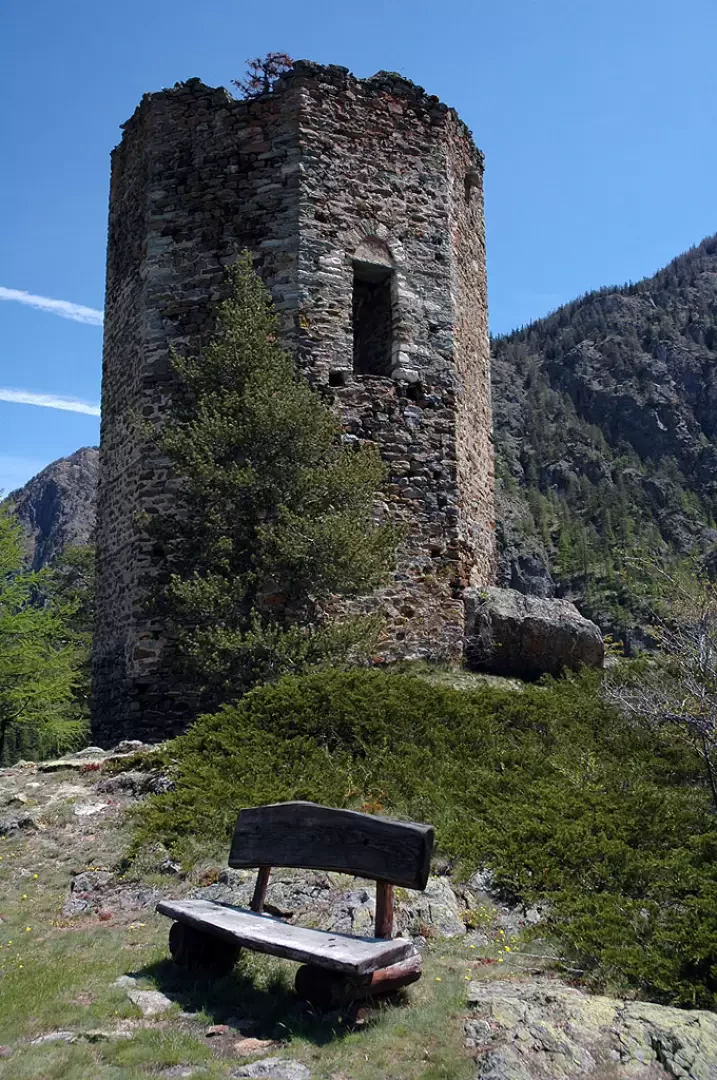
The tower, which in the 18th century was called 'des Coursi', has an octagonal plan and stone masonry. The walls are 1.80 metres thick at the base and taper at each floor with regular folds to accommodate the wooden floor beams. The entrance door is the only opening in the tower and is 7 metres above the ground. The tower, more than 11 metres high, has an external diameter of 7.50 metres and an internal diameter of about 5.30 metres. Probably in the highest part there must have been a latrine, now completely destroyed. The building is surrounded by the remains of a wall more than 1 metre thick. The conformation of the wall leads the building back to the type of castellated tower, and its small planimetric size does not suggest the existence of a castle, unless traces of other possible walls have been lost. Indeed, there may have been other bodies standing directly on the rock and later taken away by farmers for the construction of their dwellings. However, the scarcity of space around the tower and the lack of other openings suggest that the building may have served at most as a seasonal dwelling.
Historical background
The tower appears in documents as early as 1197. Shortly before 1253, the year in which the building was enfeoffed to the lords of Quart, the Savoys ordered its demolition due to the infidelity of the lords of Oyace. The new owners rebuilt the tower, giving it the shape it still has today. The lords of Quart never lent this building for general audiences, in fact in a writing of 1318 they specified that they did not pay the usual feudal homage for the tower because it was not customary. On the death of the last male descendant of Quart, the Savoys became the owners of all his possessions except for the tower, which in 1389 was still owned by the widow of the last lord of Quart. This fact is of particular importance because it seems to confirm the hypothesis that attributes a residential role to Tornalla. In 1412, the owner of the tower of Oyace was a prior of Aosta.
.Photo gallery