Roisan

Edited by:
Massimo Martini
Introduction
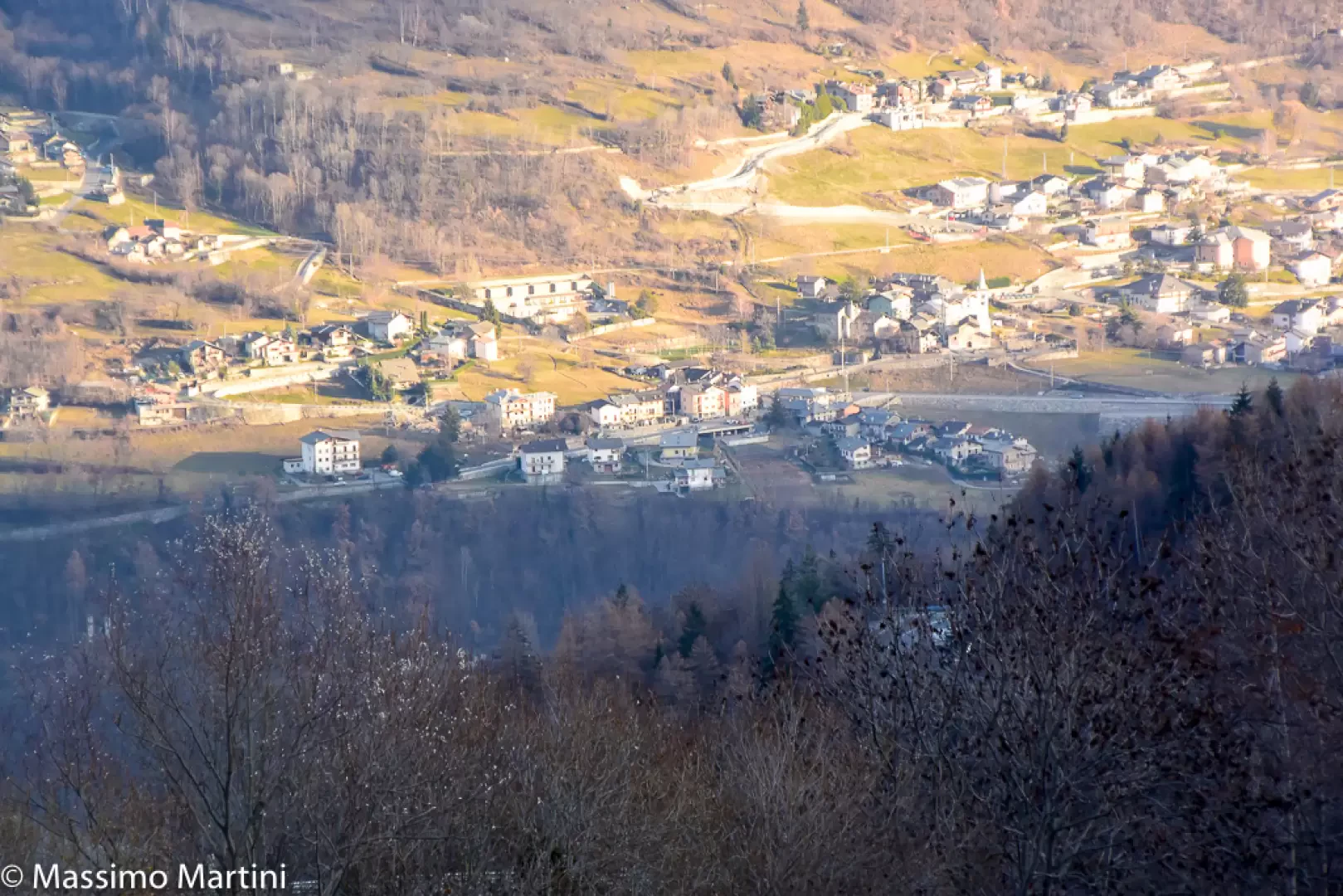
A mid-mountain municipality, located at the beginning of the Valpelline, a few kilometres from Aosta. Its territory was already inhabited in Roman times and the place name probably refers to the owner of an agricultural property at that time.Description
A mid-mountain municipality, located at the beginning of the Valpelline, a few kilometres from Aosta. Its territory was already inhabited in Roman times, and the toponym probably refers to the owner of an agricultural property at that time.
Roisan's agricultural vocation has accompanied the life of the community throughout its history: its geographical position, combined with a favourable exposure to the sun, has made its fields particularly fertile, thanks also to the work of man, who in the Middle Ages created a whole network of irrigation canals (the so-called 'rus').
The historical events of the municipality follow those of the numerous noble families that held the seigniory, until 1778, the year of its definitive enfranchisement. In 1928, the commune was suppressed by the fascist government and incorporated into the city of Aosta, but regained its administrative autonomy with the end of the world war.
Being part of the Comba Freida, Roisan also participates in the area's typical carnival traditions, with its famous costumes inspired by Napoleonic uniforms.
Information
Area: 14.00 sq km
Altitude: 866m
Maximum elevation: Becca di Roisan (2546m)
Number of inhabitants: 1037
Name in dialect:
Inhabitant name:
Patron Saint: Saint Victor de Soleure (30 September)
Internet site: www.comune.roisan.ao.en
Webcam:
Bordering municipalities: Aosta, Doues, Gignod, Saint-Christophe, Valpelline
Villages and hamlets: Baravex, Blavy, Careybloz, Chambrette, Champapon, Champvillair Dessous, Champvillair Dessus, Chaumé, Fontillon, Clavallaz, Closellinaz, Crétaz, Gorrey, Ladret, Les Adrets, Martinet (chef-lieu), Massinod, Moulin, Preil, Rhins, Pointier, Salé, Champ de Bau, Château, Chaviller, Chez Collin, Creusévy, Zatély