Pyramids of Zones

Edited by:
sonia_f
Introduction
Description
The geological genesis of the pyramids
During the last glaciation, the entire area now occupied by the Camonica Valley was covered by the imposing mass of the Camuno Glacier, which penetrated into the Bagnadore Valley about 150,000 years ago (Riss glaciation), creating a lateral glacier.
During the successive phases of ice retreat in this area, a moraine was created, due to the deposition of a large mass of debris, which completely obstructed the valley, preventing the flow of torrents and resulting in the formation of a lake. The torrents, however, continued to carry debris and eventually filled in the lake, forming the plateau where the villages of Zone and Cislano stand today.
The ancient moraine was created by the deposit of a large mass of debris.
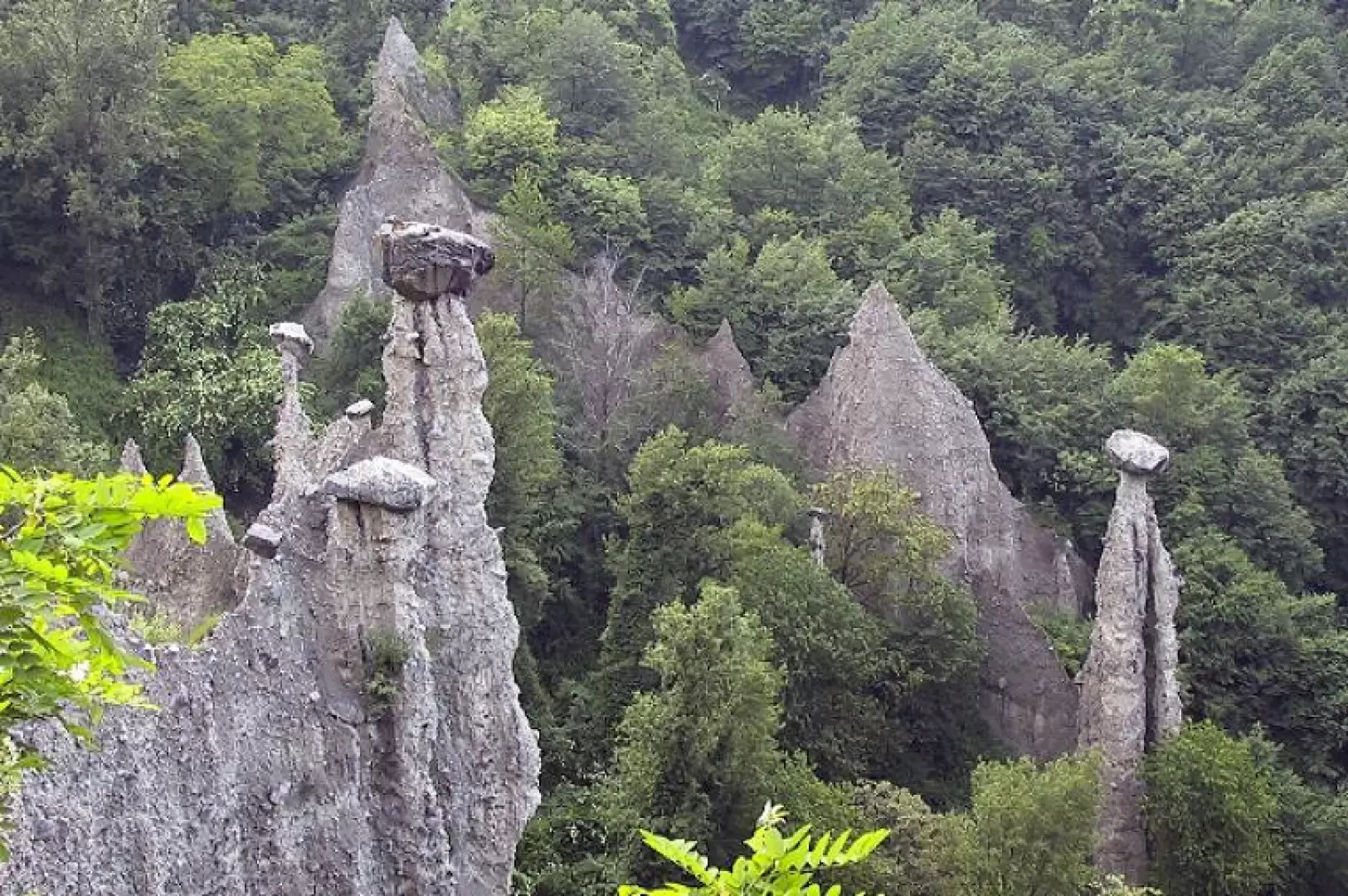
Over the millennia, the ancient moraine that dammed up the lake has been subjected to the erosive action of rainwater and run-off water, dividing first into rocky outcrops consisting of fairly cemented clay and gravel material, characterised by the presence of some large clasts, and then into pyramids.
Pyramids, in particular, form when there is a large boulder at the top of a ridge, which, acting as a cap, protects the underlying material from erosion by rain, slowing down the degradation process. When pyramids become excessively thin, the boulder above them falls, leaving them unprotected, which causes the material of which they are composed to be demolished in a relatively short period of time.
The erosive process, which can last from a few decades to a few hundred years, destroys and creates new pyramids again and again in a very long dynamic mechanism, some phases of which can now be observed. The areas not protected by the boulders thin out and deepen, forming furrows that give the landscape a jagged appearance reminiscent of American canyons.