Province of Belluno

Edited by:
Massimo Martini
Access
The Province of Belluno is accessible from the south via the Venice–Belluno motorway, with the exit at Ponte nelle Alpi providing access to the provincial capital and the main Dolomite valleys. The connection to the Cadore area and Cortina d'Ampezzo is provided by the national road di Alemagna, the main transport axis running along the Piave valley floor; the national road del Grappa e del Passo Rolle links the Feltrino area with the Valle di Primiero towards Trentino. Internal road connections are supplemented by the regional road Agordina, which runs up the Valle del Cordevole towards Alleghe and Arabba, and the regional road Feltrina, linking the province with the Treviso area. Rail services are operated by Trenitalia (TI) with direct connections on the Belluno–Padua and Belluno–Venice routes; local public transport is run by Dolomiti Bus S.p.A., with a network covering the main urban centres, though connections to the more remote valleys — particularly Val di Zoldo and Valle dell'Ansiei — may be limited outside school term times. The main airports serving the province are Venice "Marco Polo" and Treviso "Canova". Winter tyres or snow chains are compulsory throughout the province from November to April; some secondary mountain passes towards the provinces of Bolzano and Trento may be closed or restricted during the winter months.
Introduction
The Province of Belluno occupies the entire northern sector of Veneto, making it the only province in the region that is entirely mountainous. The territory is shaped by the orographic systems of the Eastern Dolomites and the Belluno Pre-Alps, extending from the border with Austria in the north to the valleys of the Piave and Cismon rivers in the south. It borders the Autonomous Province of Bolzano and the Autonomous Province of Trento to the west, the provinces of Treviso and Vicenza to the south, and Friuli-Venezia Giulia to the east. The landscape is defined by internationally significant limestone massifs, deep valleys and a forest system whose management dates back to centuries of Venetian influence. Within the regional context, Belluno plays an important role both in the conservation of Alpine biodiversity and in the hiking and mountaineering offer associated with the Dolomites, inscribed as a UNESCO World Heritage Site in 2009.
Description
The Belluno territory is organised around the hydrographic basin of the Piave river, which crosses the province defining its main valleys: the Valbelluna, the Cadore, the Agordino and the Val di Zoldo. These valleys are bounded by internationally renowned massifs including the Pelmo, the Civetta, the Antelao and the Tre Cime di Lavaredo, as well as smaller groups that create a mountain landscape of considerable morphological complexity. The valley floors, relatively populated and connected by a consolidated historic road network, contrast with the Dolomite walls rising vertically to three thousand metres, creating the distinctive skyline that has made the Dolomites recognisable worldwide.
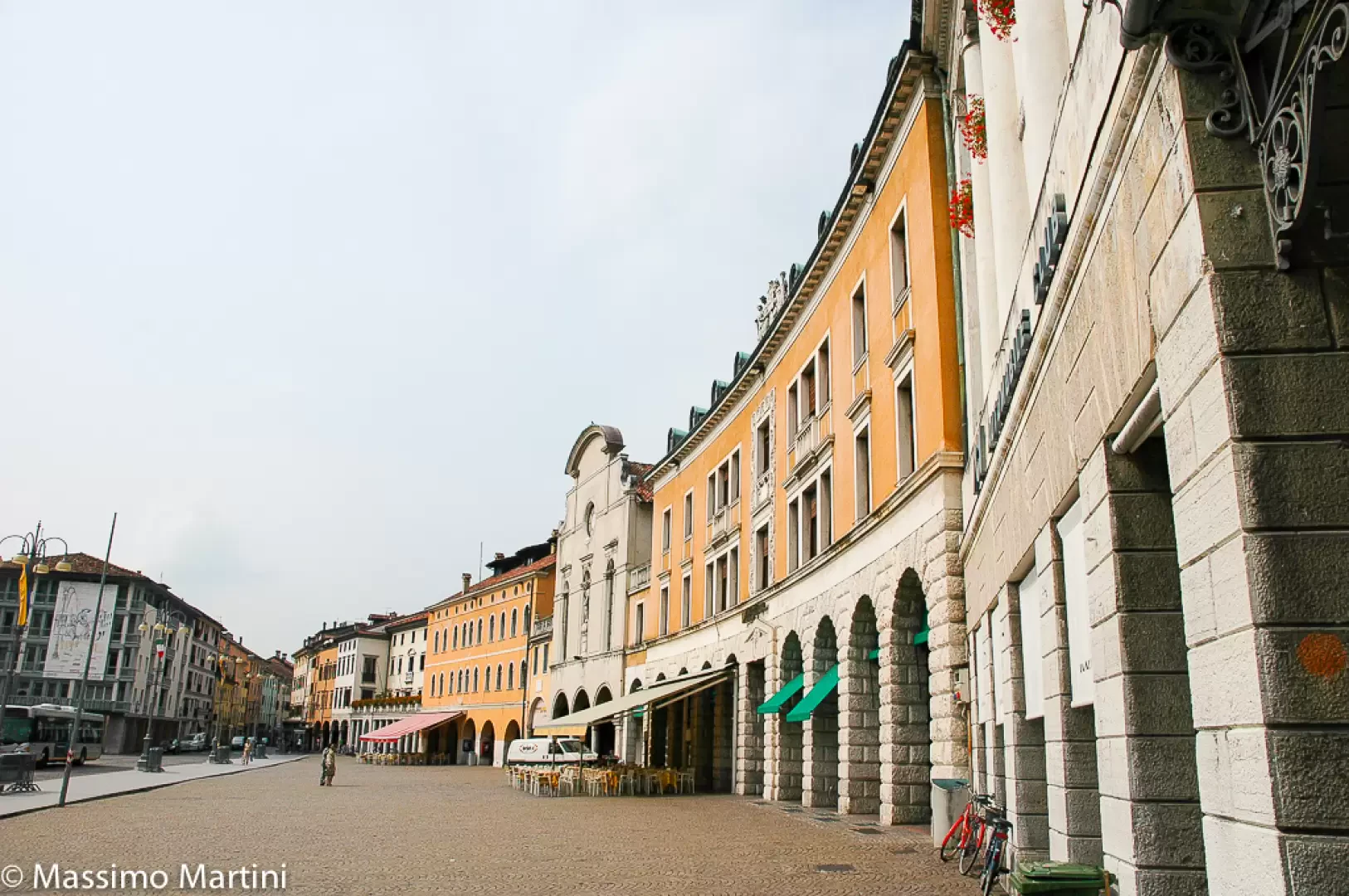
The history of the province is deeply marked by its ties with the Republic of Venice, which for centuries exploited the timber from the Cadore forests for its Arsenal. This presence left an architectural legacy blending Gothic and Renaissance elements, still visible in the historic centre of Belluno and in the village of Pieve di Cadore, birthplace of the painter Titian. Venetian rule also shaped the forest structure through the creation of the Regole, communal institutions for the management of forests and pastures that survive in part to this day as a model of mountain land governance. In the twentieth century, the province was severely affected by the First World War: the Dolomite front passed through several valleys, leaving behind trenches, military roads and war cemeteries that form part of the territory's widespread historical heritage.
The local economy has evolved from traditional forestry and pastoralism towards specialised industrial production. The eyewear district, centred on Agordo and surrounding municipalities, has established the province as one of the world's leading production hubs for optical frames and accessories, home to globally recognised companies. Alongside this sector, mountain agricultural production maintains a specific identity: the Dolomiti Bellunesi honey, the Lamon bean IGP, the Piave DOP cheese and livestock-derived products represent a gastronomic heritage shaped by altitudinal conditions and pastoral traditions of the individual valleys.
Environmental protection finds its main expression in the Belluno Dolomites National Park, established in 1990 over an area of more than 31,000 hectares between the valleys of the Piave, the Cordevole and the Cismon. The protected area hosts ecosystems of remarkable integrity, where the Aquila chrysaetos nests and stable populations of Rupicapra rupicapra and Capreolus capreolus are present. Vegetation ranges from Fagus sylvatica woodland in thermophilous zones to extensive formations of Picea abies and Pinus mugo at higher altitudes. At provincial scale, the 2009 UNESCO inscription of the Dolomites encompassed several sites including the Tre Cime di Lavaredo, the Pelmo and Croda da Lago massif, the Civetta and the Pale di San Martino Group — serial natural properties that together constitute the largest natural site on the World Heritage List in Europe.
The hiking offer in the province is built around the Dolomites High Routes, multi-day itineraries crossing the main mountain groups without descending to the valley floor. High Route No. 1, linking Lago di Braies to Belluno in twelve stages via the Lagazuoi and the Schiara group, is regarded as the reference itinerary for Dolomite trekking. Further options include the Anello Zoldano circular route, the Via degli Ospizi — a historic trail connecting Alpine communities — and the Cammino delle Dolomiti, stretching over five hundred kilometres between sites of cultural and scenic interest. In winter, the province offers an extensive network of ski touring and snowshoeing routes, with access to high-altitude facilities such as the Rifugio Venezia and the Rifugio Nuvolau.
Mountaineering in the Belluno area has a history stretching back to the second half of the nineteenth century, when the great Dolomite massifs drew climbers from across Europe. The north face of the Civetta, with its 1,200 metres of near-vertical rock, remains a world benchmark for both classic and modern routes of the highest difficulty. Emilio Comici was among the pioneers of sixth-grade ascents on the Civetta and Sorapiss; Tita Piaz, known as the "devil of the Dolomites", became synonymous with bold ascents throughout the provincial territory. In the latter twentieth century, Franco Miotto pushed the boundaries of exploratory mountaineering by venturing into the remote "viàz" of the Schiara group and establishing technically extreme routes on the Burel face. Dino Buzzati, writer and journalist from Belluno, devoted a significant part of his literary work to the Dolomite crags, helping to shape the imaginative world associated with the Belluno mountains.
Trail running has found in the province an ideal setting for technically demanding events of international standing. The Lavaredo Ultra Trail, starting from Cortina d'Ampezzo, crosses the UNESCO Dolomite landscapes on distances of up to 120 km and 5,800 m of elevation gain, and is considered one of the most challenging ultratrail races in Europe. The Transcivetta, a two-person team race unfolding beneath the north face of the Civetta, and the Dolomiti Extreme Trail in Val di Zoldo, with routes up to 103 km, complete an offer drawing participants from around the world. More accessible events such as the Dolomiti Beer Trail at Pedavena broaden the calendar to a wider audience.
Information
General data
Chief town: Belluno
Area: 3,672.26 km²
Minimum elevation: 262m
Highest point: 3,343m – Marmolada – Punta Penia
Population: 207,894 (as of 31.12.2014)
Name of inhabitants: Bellunesi
Municipalities: 67 – list - map
Bordering provinces and territories: Autonomous Province of Bolzano – Autonomous Province of Trento – Province of Udine – Province of Pordenone – Province of Treviso – Province of Vicenza – Austria (Tyrol, Carinthia)
Region: Veneto
Country: Italy
Official website: https://www.provincia.belluno.it