Ayasse Torrent

Edited by:
Massimo Martini
Introduction
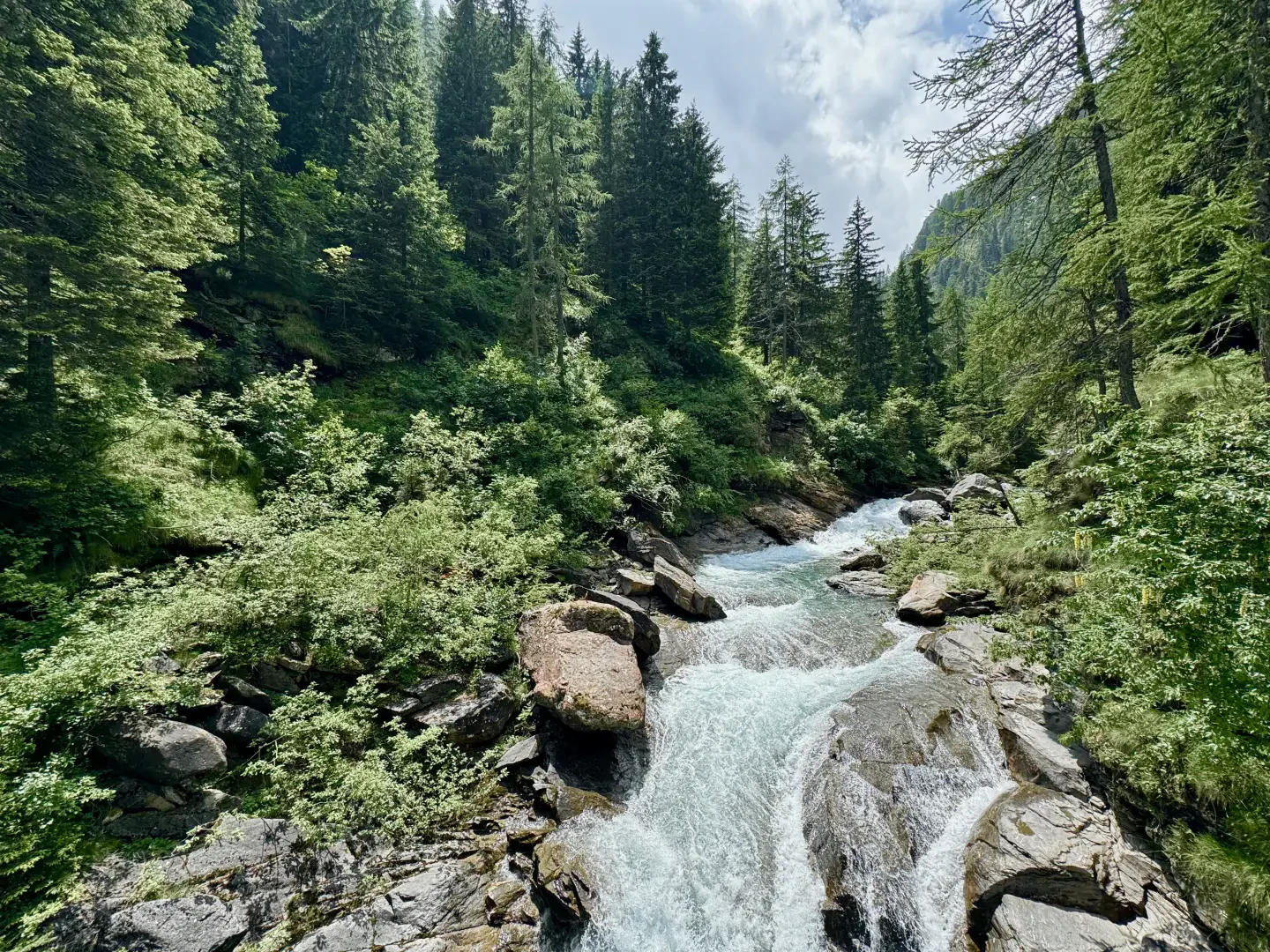
The Ayasse stream flows through the picturesque Champorcher Valley, a side valley of the Aosta Valley located on the orographic right of the Dora Baltea river. It rises from the slopes of Mont Glacier, at an altitude of about 3,185 metres, and runs through the entire valley until it flows into the Dora Baltea near the municipality of Hône. This watercourse plays a fundamental environmental and hydrological role, feeding numerous local ecosystems and contributing significantly to the region's water regime.
Description
The Ayasse has a typical Alpine torrential regime, characterised by seasonal variations in flow. During the spring and summer, melting snow and precipitation greatly increase the flow, while in the winter months the flow decreases, although it maintains a certain continuity thanks to the perennial springs. The steep gradient of its course, especially in the mountain sections, accelerates the velocity of the water, favouring erosive processes that shape the surrounding landscape and transport sediments downstream. This erosive dynamic has given rise to geological formations of great interest, such as the 'goye' of Hône, three natural pools carved into the rock, accessible via footbridges and equipped paths.
The Ayasse catchment area covers the entire Champorcher Valley, collecting water from numerous minor tributaries and from precipitation falling on the surrounding mountains. The area is characterised by a variety of natural environments, from alpine pastures to coniferous forests, hosting a rich biodiversity. The presence of the Mont Avic Natural Park in the upper part of the valley testifies to the ecological importance of the region and its commitment to the conservation of natural habitats.
Along its course, the Ayasse flows through several municipalities, including Pontboset and Champorcher, influencing the lives of local communities. Historically, the torrent has been a valuable resource for agriculture and animal husbandry, providing water for irrigating fields and livestock. Today, in addition to its ecological value, the Ayasse is a tourist attraction for nature lovers and walkers wishing to explore the beauty of the Champorcher Valley.