Abaz

Edited by:
Massimo Martini
Access
The village of Abaz is mainly accessed via the regional road linking Verrès to Brusson and Champoluc: from the valley floor, once past the main town of Challand-Saint-Victor, follow the signs for the villages halfway up the hillside until you reach the turn-off for Abaz. The road, which is tarmacked and well-maintained, passes through woodland and offers short stretches of scenic views. Car parks are available near the village centre; for those travelling by public transport, the regional bus route linking Verrès with the Ayas Valley stops at Challand-Saint-Victor, with connections to the inland villages available on request during the peak months. During the winter season, road conditions may vary and it is advisable to check in advance whether the roads are passable.
Introduction
The village of Abaz, nestled within the municipality of Challand-Saint-Victor, is situated in the middle Ayas Valley, along the course of the Evançon, in an area that has for centuries served as a natural route between Valtournenche and the upper valleys. The setting is that of a side valley spared from large tourist crowds, where a dry climate and a sunny, sheltered position – protected from the prevailing winds – foster a sense of tranquillity and well-being. The landscape surrounding Abaz bears the marks of ancient human settlement, as evidenced by the numerous traces dating back to the Eneolithic period that dot the area, confirming the long history of continuous habitation and the strategic importance of the area for human movement along the valley.
Description
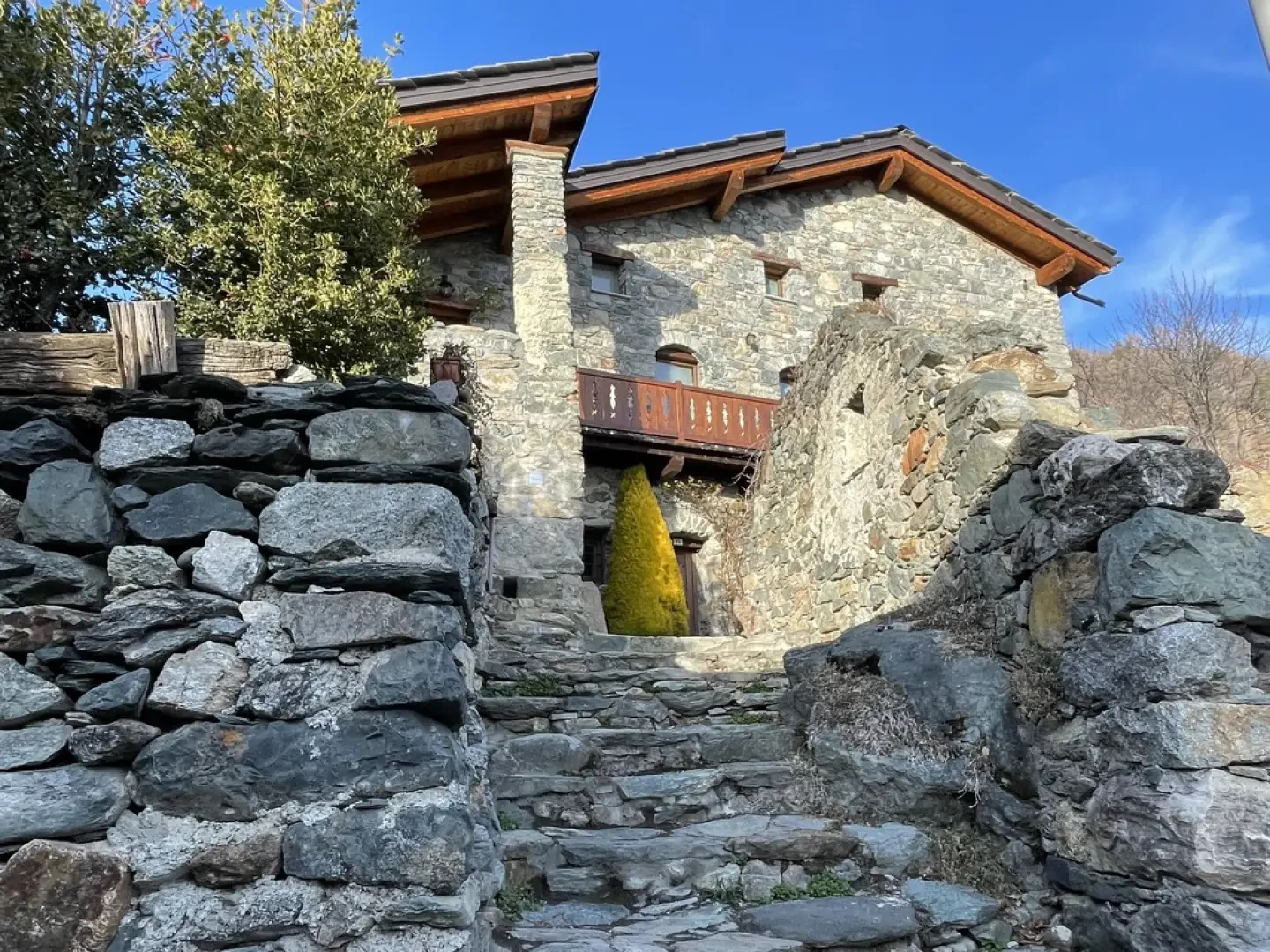
The village of Abaz lies a short distance from the valley floor, nestled amongst a mosaic of meadows, cultivated fields and deciduous woodland that hint at the proximity of the Lago di Villa nature reserve, one of the most significant wetlands in the Aosta Valley in terms of biodiversity. This village, like many other settlements in the municipality, is characterised by its deep connection to medieval history, shaped by the fortunes of the powerful Challant family. The favourable microclimate has always encouraged traditional farming practices and still allows for the preservation of a rural way of life in which the rhythm of the seasons shapes community life. Among the traditional architecture, one finds stone and timber houses, communal ovens, ancient ‘rascard’ (traditional drying rooms) and small chapels; elements that help define the village’s identity and bear witness to the vitality of its local customs.
From a historical perspective, village life was profoundly influenced by the Challant lordship, under whose rule activities such as livestock farming and the cultivation of cereals, potatoes and mountain fruit flourished for centuries. The inhabitants of Abaz and the neighbouring villages organised their agricultural work according to systems of sharing resources and labour, passing down traditions of solidarity and fostering recreational activities and folk rituals that are still very much alive today in the patron saint’s festivals and the region’s traditional cuisine. The Lago di Villa nature reserve is now a popular destination for walkers: the footpaths leading from Abaz take you to the lake, allowing you to explore a natural environment that is home to rare species of aquatic plants, reed beds, moisture-loving woodlands and a rich variety of birdlife, offering visitors points of interest from both a scientific and scenic perspective. These walks allow visitors to appreciate not only the rich flora but also sweeping panoramic views of the middle valley and the surrounding mountain ridges, amongst which the view towards Mont Zerbion and the Rosa range stands out.
Information
- Altitude: 935 m
- Name in the local dialect: Arcesaz
- Name of inhabitants: -
- Patron saint: St James