
Edited by:
redazione
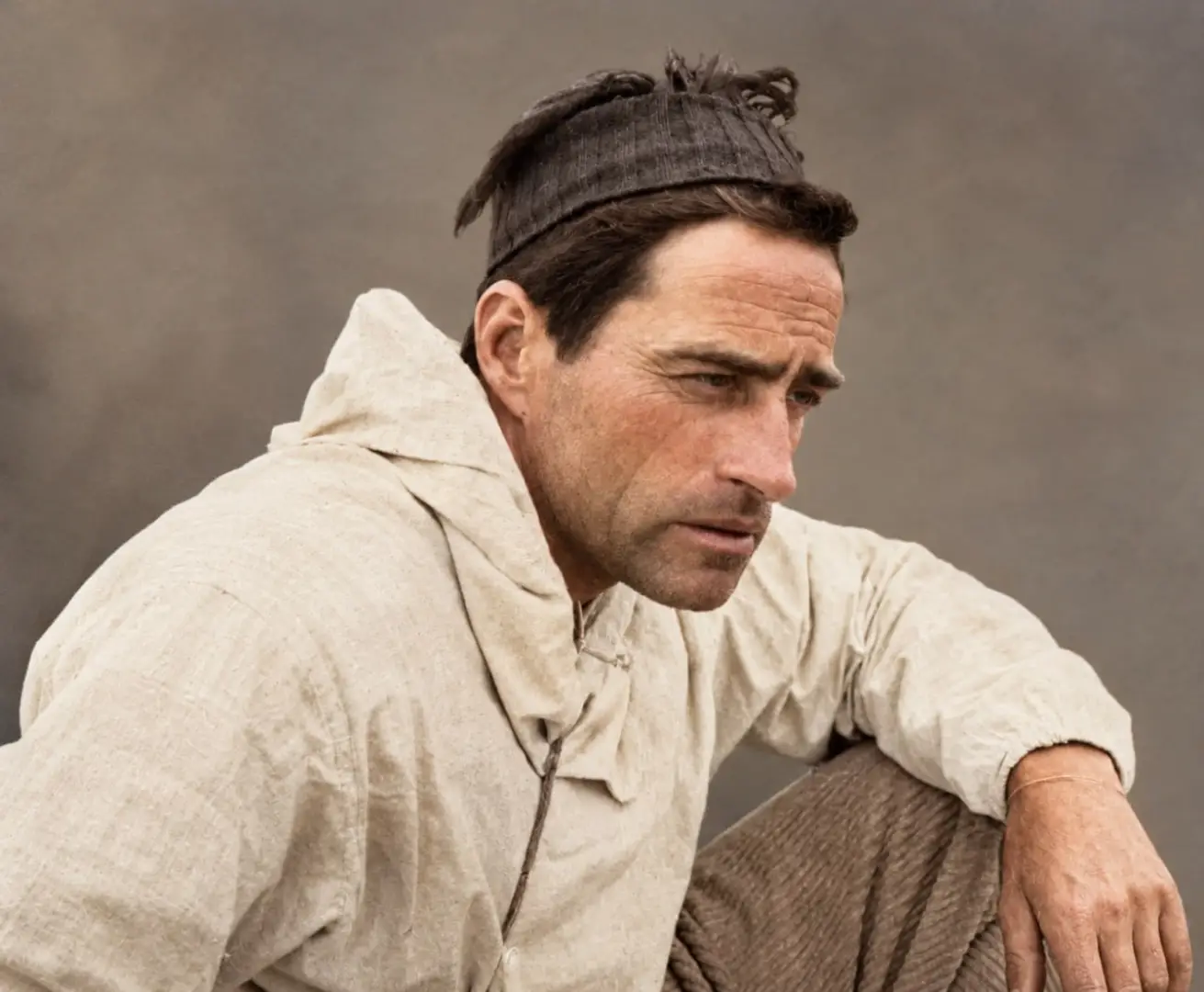
A mountaineer from Trieste, in 1933 he was the first to climb the north face of Cima Grande di Lavaredo with Giuseppe and Angelo Dimai.
Personal details
name: Leonardo Emilio Comici
pen name / nickname: l'Angel of the Dolomites
Date of birth: 21 February 1901 – Trieste
Date of death: 19 October 1940 – Vallunga, Selva di Val Gardena
Nationality: Italian
Occupation: mountaineer, mountain guide, ski instructor
Affiliation: Società Alpina delle Giulie (CAI Trieste), XXX Ottobre Association
Biography
Leonardo Emilio Comici was born in Trieste on 21 February 1901 to Antonio, a shipyard worker, and Regina Cartago. After completing his secondary education, in 1916 he began working as a clerk in the port’s general warehouses. He attended the Pitteri leisure centre, where he took part in physical activities; having exceeded the age limit for membership, on 2 December 1918 he founded, together with other peers, the XXX Ottobre sports association, whose name commemorates 30 October 1918, the day on which Trieste declared itself free from Austria.
The following year, the association set up a caving group, and the programme, as set out in the section’s handbook, was drawn up by Comici: planimetric surveys of the caves, contributions to the land registry, and reports on karst phenomena. Together with his companions, he surveyed some eight hundred abysses and sinkholes in the Karst, and in October 1926, following an exploration that had begun in April, he reached the bottom of the Bus de la Lum, on theCansiglio Plateau, at a depth of 500 metres – a world record at the time. His military service, in the radio-telegraph corps, lasted from 1922 to 1923. His first significant climbs date back to 1925, whilst he gave up underground exploration in 1928.
The cliffs of Val Rosandra, a few kilometres from Trieste, struck him as ideal for a climbing training ground. In 1929, he helped found the Group of Mountaineers, Rock Climbers and Skiers (GARS), the Trieste branch of the CAI, and within it, the Val Rosandra Rock Climbing School.
In 1932, he left his job to become a mountain guide and settled in Misurina, where he remained until the end of 1938: he was the first guide to come from the city. Alongside his work as a guide, he worked as a ski instructor in Misurina, San Martino di Castrozza, Sestriere, Claviere, Limone Piemonte and in the Arlberg region. He often took clients on his first ascents. From 1935 to 1939, he was appointed as an instructor at the Central Military Mountaineering School in Aosta, which took him to various parts of the Alps, from the Tre Cime di Lavaredo to the Brenta, from the Sassolungo to the Gran Paradiso. As a guide, he also climbed in the Mont Blanc massif, in Zermatt, in the Dauphiné and in the Jungfrau massif, and between 1934 and 1937 he made first ascents in Yugoslavia, France, Spain, Greece and Egypt.
He viewed climbing as an artistic expression rather than an athletic feat: what mattered was the route – ideally that of a drop of water falling from the summit – and the elegant and confident manner in which it was followed. This philosophy was accompanied by documented technical innovations: a faster abseil, using a sling and carabiner attached to the leg; traversing a rock face using two ropes manoeuvred by alternating tension; and a method for overcoming overhangs using pitons, stirrups and rope manoeuvres. Teaching played a constant part in his work: he was an instructor at rock-climbing schools and gave lectures accompanied by a series of photographs and, later, by short films.
The ascent of the north face of Cima Grande di Lavaredo required ninety pitons, as Comici himself wrote, and reignited the debate on the use of artificial aids. The day before reaching the summit, Comici handed over the lead of the rope team to Giuseppe Dimai, due to fatigue and cramps in his forearms.
At the end of 1938, he moved to Selva di Val Gardena, where he was appointed director of the National Ski School. In Selva, he held an administrative post within the Fascist regime: sources refer to him as either a podestà or a prefectural commissioner, and place the start of his tenure at various dates between 1938 and 1940. David Smart’s biography explores the theme of his political commitment and his personal contradictions.
He died on 19 October 1940 at the Vallunga climbing wall, near Selva, where he was with a group of people: a sling gave way, causing him to fall. Sources agree on the date, location and accidental nature of the event, but differ on the details of the manoeuvre. On 16 March 1941, CONI posthumously awarded him the Gold Medal for Sporting Valour, a proposal that had been pending for three years.
Mountaineering exploits
Villaco bell tower – 1925 – east face with Giulio Benedetti, a variant on the first route established in 1921
Cima Innominata (Jof Fuart Group) – 1927 – first ascent of the north-east gully with Gino Razza
Cima di Riofreddo (Jof Fuart Group) – 1928 – first ascent of the north face with Giordano Bruno Fabjan
Cima degli Aghi and Cima del Bancon (Civetta Group) – 1928 – first ascents with Domenico Rudatis
Cima di Riofreddo (Jof Fuart Group) - 1929 – first ascent of the north ridge with Fabjan
Dito di Dio (Sorapiss Group) – 1929 – first ascent of the north-west face with Fabjan
Tre Sorelle (Sorapiss Group) – 1929 – north face with Fabjan, two new routes (one ascending and one descending), first Italian climb of grade VI
Cimon del Montasio - 1930 – first ascent of the west face with Fabjan, Riccardo Deffar and Mario Orsini
Cengia degli Dei (Jof Fuart) – 1930 – traversed with Mario Cesca along the slopes of the massif
Croda dei Toni, Cima di Mezzo - 1930 – first ascent of the north-west face with Fabjan and Piero Slocovich
Civetta - 1931 – first ascent of the ‘Direttissima’ route on the north-west face with Benedetti
Zuccone Campelli - 1931 – crack route with Mary Varale, Mario Dell’Oro and Riccardo Cassin
Torre del Diavolo (Cadini di Misurina) - 1932 – direct ascent from the Vallone della Neve with Mario Salvadori
Cima Grande di Lavaredo (2,999 m) - 1933 – first ascent of the north face, the Comici-Dimai route, with Giuseppe and Angelo Dimai
Cima Piccola di Lavaredo (2,857 m) - 1933 – first ascent of the Spigolo Giallo with Mary Varale and Renato Zanutti
Punta di Frida (Cima Piccola di Lavaredo) - 1934 – route with Fabjan, Vittorio Cottafavi and Gianfranco Pompei
Torre Piccola di Falzarego - 1934 – first ascent of the south-west ridge with Mary Varale and Sandro Del Torso
Cima Piccola di Lavaredo (2,857 m) - 1936 – first ascent of the north-west ridge with Piero Mazzorana
Dito di Dio (Sorapiss Group) - 1936 – first ascent of the north face with Mazzorana and Del Torso
Torre Comici (Val di Suola, Carnic Alps) - 1936 – first ascent with Del Torso and Zanutti
Cima d’Auronzo (Croda dei Toni group) – 1937 – first ascent of the south face with Severino Casara
Cima Grande di Lavaredo (2,999 m) - 1937 – solo repeat of the Comici-Dimai route in 3h45’
Salame del Sassolungo (later known as the Comici Bell Tower) – 1940 – first ascent of the north face with Casara
Places and commemorations
Emilio Comici Mountain Hut - Selva di Val Gardena, at the foot of the Sassolungo, in the area of Piz Sella and Plan de Gralba – named after Comici
Zsigmondy-Comici mountain hut - Piani di Rio di Sopra, below the Croda dei Toni, in the municipality of Sesto – named after Emil Zsigmondy and Comici
Comici Bivouac - Busa del Banco, in the municipality of Auronzo di Cadore – named after Comici
Emilio Comici National Mountaineering School - Trieste, Società Alpina delle Giulie (CAI) – originally founded as the Val Rosandra Rock Climbing School, named after Comici following his death
Works
Heroic Mountaineering, Milan, Hoepli, 1942
With Me at Ski School, Milan, Hoepli, 1945
Heroic Mountaineering, second updated edition, Bologna, Tamari, 1961
Heroic Mountaineering, Turin, CDA & Vivalda, 1995
Bibliography
As a key reference
Severino Casara, The Art of Climbing by Emilio Comici, Milan, Hoepli, 1957
Mario Barsali, entry Comici, Leonardo Emilio, in Biographical Dictionary of Italians, vol. 27, Rome, Istituto dell’Enciclopedia Italiana, 1982
Spiro Dalla Porta Xidias, Emilio Comici. The Legend of a Mountaineer, Belluno, Nuovi Sentieri, 1988
Spiro Dalla Porta Xidias, Emilio Comici. The Angel’s Wings, Nordpress, 2001
David Smart, Emilio Comici: Angel of the Dolomites, Victoria, Rocky Mountain Books, 2020
David Smart, Emilio Comici. The Angel of the Dolomites, Milan, Solferino, 2022
Marco Proietti, Emilio Comici. Mountaineer, Aesthete, Man, De Piante Editore, 2026